How Big is Phillip Island?
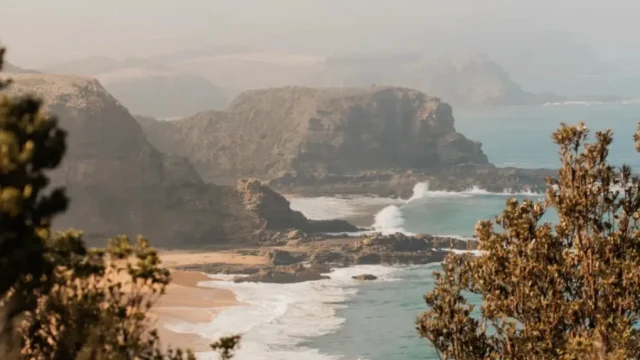
How big is Phillip Island? That question seems to pop up more often than you’d ever think – usually from travellers who have a picture in their mind of some tiny place that you could lap in an hour, or a massive one that would put Tasmania to shame. The truth is somewhere in the middle – & understanding the island’s actual size is going to help you plan a bit smarter, avoid the bottlenecks & actually enjoy the place instead of rushing through.
Every now & then, I get to chatting with the guys from AutopiaTours & they’re all saying the same thing – people always underestimate the size. I’m Paul Beames, & I’ve been around the Bass Coast for years, so I know its back roads, its headlands chock full of birds, its coastal walks that are so pretty they sting your calves, & its summer traffic that’s slower than a wombat with a full belly. If you’ve ever done a Phillip Island tour, you’ll know exactly what I’m on about.
Contents
- 1 The Island’s Real Size (And Why Travellers Get It Wrong)
- 2 What The Size Means For Your Itinerary
- 3 How long does it take to drive around the island,?
- 4 Walking and Cycling Distances Make The Island Feel Bigger
- 5 The Coastline Stretches Far Longer Than You Expect
- 6 Seasonal Crowds Change How Big The Island Feels
- 7 Wildlife Adds Its Own Timetable
- 8 A Simple Half-Day or Full-Day Flow
- 9 FAQ
The Island’s Real Size (And Why Travellers Get It Wrong)
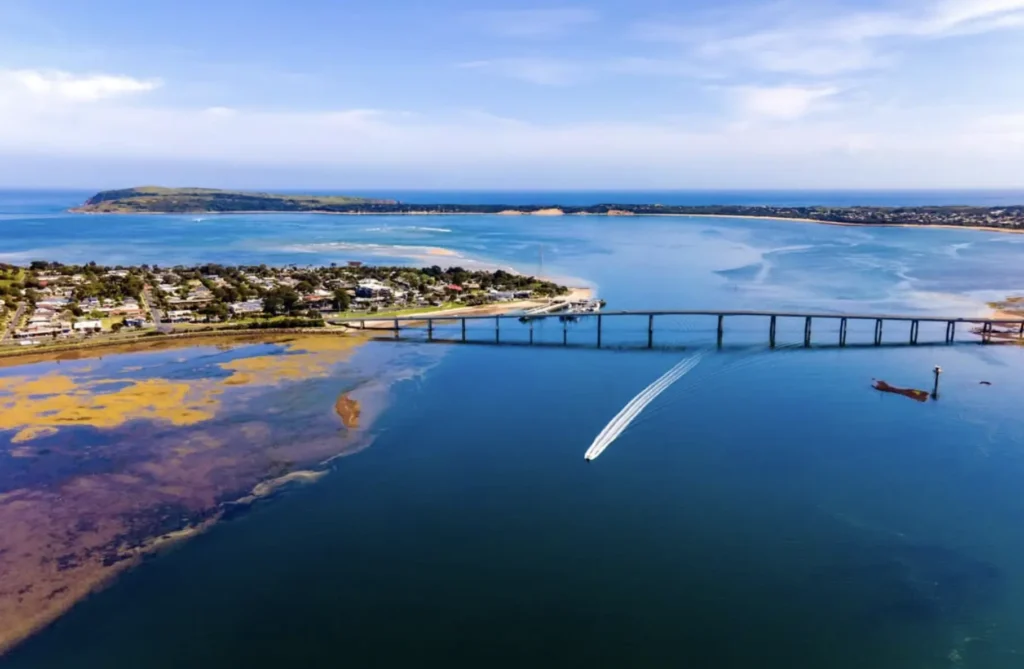
Most people get a shock when they find out that Phillip Island measures up at about 101 square kilometres – small enough to feel snug, but big enough that you won’t cover the whole place in a lazy afternoon. On a map, its all looking compact. Out on the ground, the roads wind around the wetlands, the coastline spreads out towards Bass Strait, & the scenic pull-offs at Seal Rocks & the Nobbies Centre are just too tempting – you end up stopping more often than you planned.
Because the island is linked to mainland Victoria by a single bridge over San Remo, travellers often think everything must be right next door. Technically, they’re right – nothing is miles away. But then add in summer crowds, wallabies wandering all over the place, & the odd GPS mishap, & youve got yourself an island that feels a lot bigger than the numbers say it is.
Phillip Island By The Numbers
| Measurement | Detail |
|---|---|
| Total Area | ~101 km² |
| Length (east–west) | ~26 km |
| Width (north–south) | ~9 km |
| Coastline Length | ~97 km |
| Highest Point | ~112 m (near Woolamai area) |
| Driving Loop Time | 1–1.5 hours without stops |
| Population (variable) | ~14,000 permanent residents |
Even AutopiaTours guides joke that it feels bigger each time they run their Phillip Island tours — especially when wildlife slows the convoy to a crawl.
What The Size Means For Your Itinerary
Phillip Island is small enough that you could probably get by winging it. But trust us – you can’t. I mean, you can try, but you’ll end up missing half the places that make this place so special – whether that’s Woolamai’s national surfing reserve, the Koala Conservation Centre, or family-friendly attractions like A Maze ‘N Things.
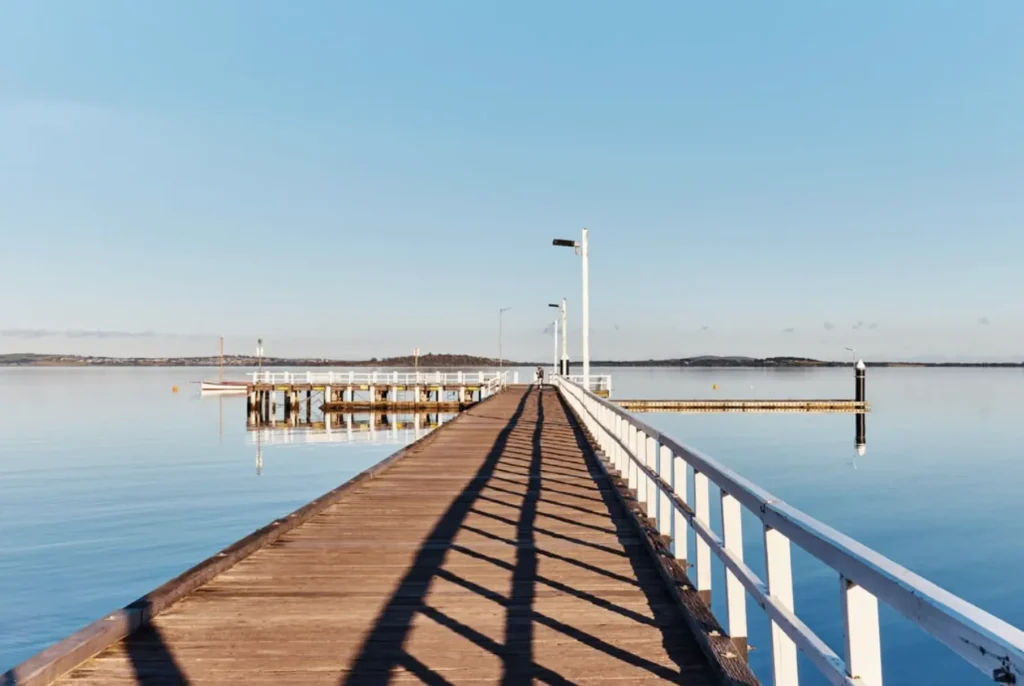
To put it bluntly: don’t let the island’s compact footprint fool you – just because it’s small doesn’t mean you can just turn up and expect to see everything in one day.
Key Areas You’ll Be Moving Around
- Cowes — where you can grab a coffee, take a stroll along the beach, visit the Cowes Jetty, and stop off for some chocolatey treats from the Phillip Island Chocolate Factory.
- Nobbies / Summerlands — get ready for rugged coastline, stunning views of Seal Rocks and a healthy dose of ocean spray straight from Bass Strait.
- Cape Woolamai — enjoy cliff trails, take in the views from the pink granite headlands, and walk some of Victoria’s best coastal paths.
- Rhyll & Wetlands — come for the birdlife, take a walk on the Woodland Loop tracks, and enjoy some quieter moments, including a visit to Churchill Island (just a short bridge walk across).
- Newhaven — this is where you can access the bridge, take a walk on Newhaven Beach, and go for a scenic cycle ride.
These all cluster in different bits of the island, and before you know it, the kilometres start to rack up – especially if you’re on the lookout for wildlife encounters, or you just can’t resist stopping off at Panny’s chocolate factory to satisfy your sweet tooth.
How long does it take to drive around the island,?
Most people reckon they can do the island in an hour – and on the surface, it’s true – with the ring roads making a neat little loop. But, let’s be real, you’ll be stopping a lot. As the sun goes down, wallabies make an appearance, you’ll want to pause at every ocean lookout to grab another photo, and if you time it right, you’ll catch the sunset at one of Victoria’s top spots – and you won’t be able to help but pull over and take it all in.
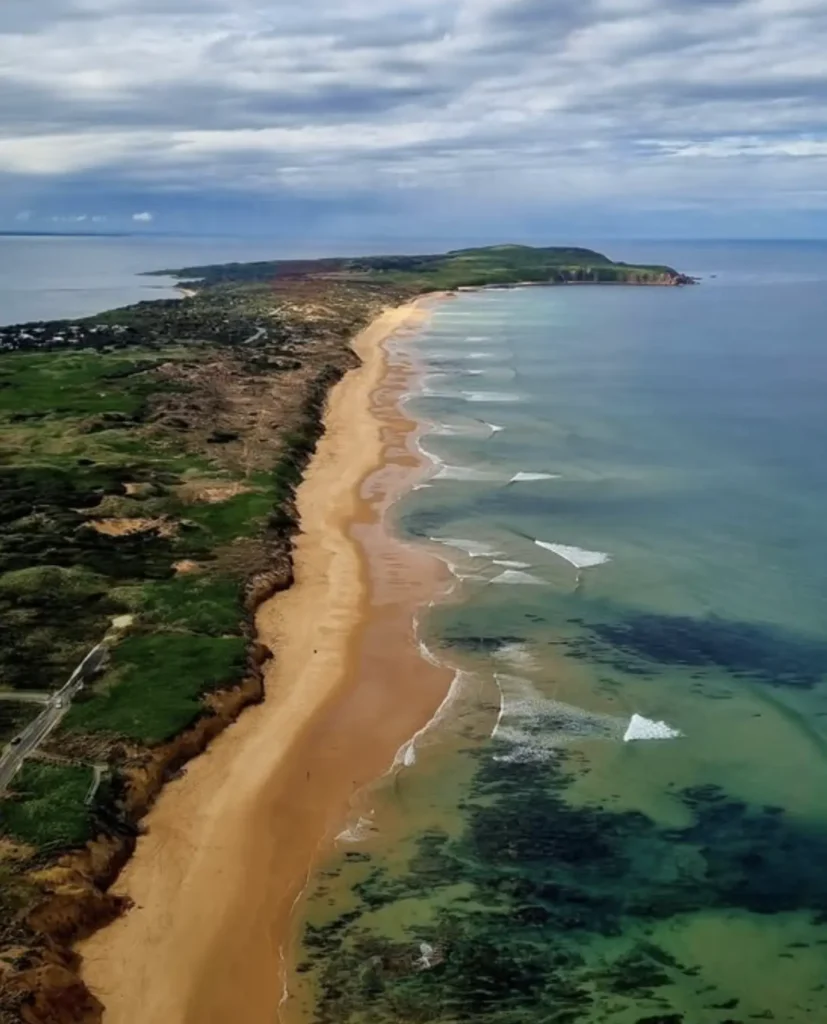
So, how do you plan this? A realistic schedule is:
- 3-4 hours for a half-day highlights tour
- 6-8 hours for a full day of beaches, wildlife, and the coastal walks
- 12+ hours if you want to cram in longer hikes, Churchill Island, and watch the penguins in the evening at the Little Penguin colony
Suppose you’ve only got 90 minutes booked in before the penguins to see the whole place – good luck with that. You’ll be racing the daylight like a pelican on a mission.
Walking and Cycling Distances Make The Island Feel Bigger
Phillip Island isn’t actually that big, but when you take your time, it suddenly opens up. The tracks curl around the headlands, the wetlands stretch on for miles, and Cape Woolamai alone has multiple walking circuits that go on to show just how broad this landscape really is.
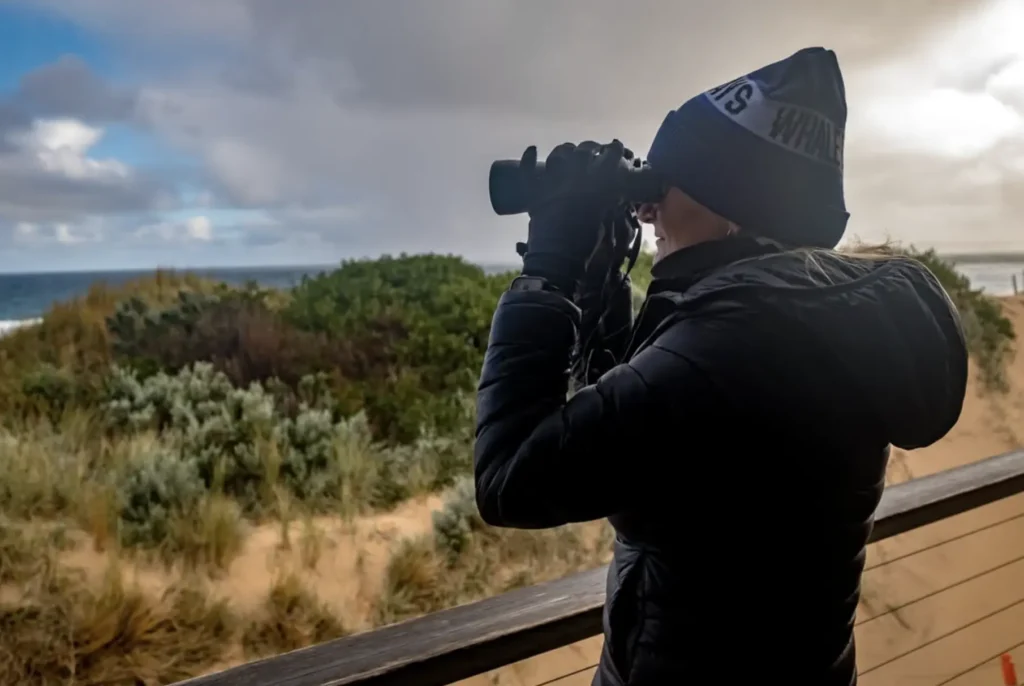
Top Walks That Showcase The Island’s Scale
- Cape Woolamai Circuit (3–8 km options)
Cliff edges, seabirds, and views over Bass Strait. - Churchill Island Loop & Woodland Loop (up to 7 km)
Wetlands, farm heritage, and peaceful trails. - Nobbies Boardwalk (~1 km)
Short, sharp, windy — and overlooking Seal Rocks.
Walking these tracks is one of the best ways to get a feel for the island’s shape and size – and trust me, no map will ever be able to do this place justice in the same way.
The Coastline Stretches Far Longer Than You Expect
Having almost 97 kilometres of coastline isn’t something to be taken lightly. That’s a whole lot of surf breaks, dunes, sheltered beaches and sea life – and while some of these places are accessible via Wildlife Coast Cruises and the Wild Ocean Ecoboat, others are still waiting to be discovered.
Those south-facing beaches get absolutely pounded by the full force of Bass Strait when the wind starts blowing – and it doesn’t take long. Then again, the northern beaches are generally a lot gentler and much better suited to families, with more leisurely swimming and safer shallows to explore around Cowes and Newhaven.
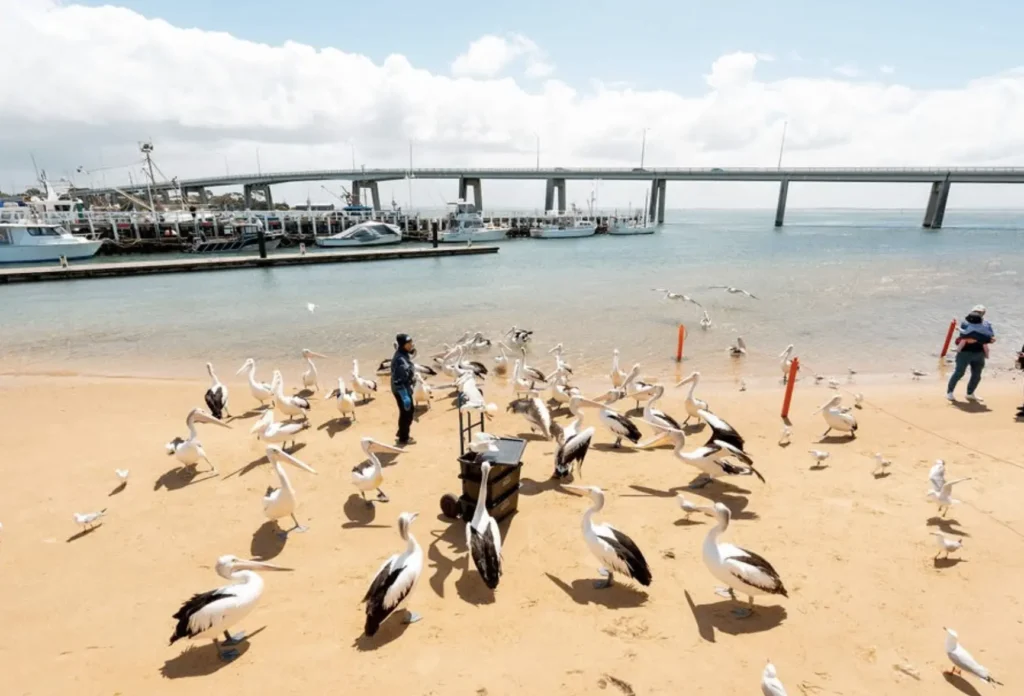
What This Means For Planning
- Some beaches are a lot more suited to catching waves than others.
- Don’t get caught out by the weather – it can change in no time.
- Coastal walks can easily take longer than you expect.
- The fact is, the wildlife hotspots aren’t all bunched together; they’re spread out all over the place.
Seasonal Crowds Change How Big The Island Feels
This is one thing no map will ever be able to tell you – Phillip Island tends to shrink and swell depending on the time of year, not in a physical sense, of course, but in experience.
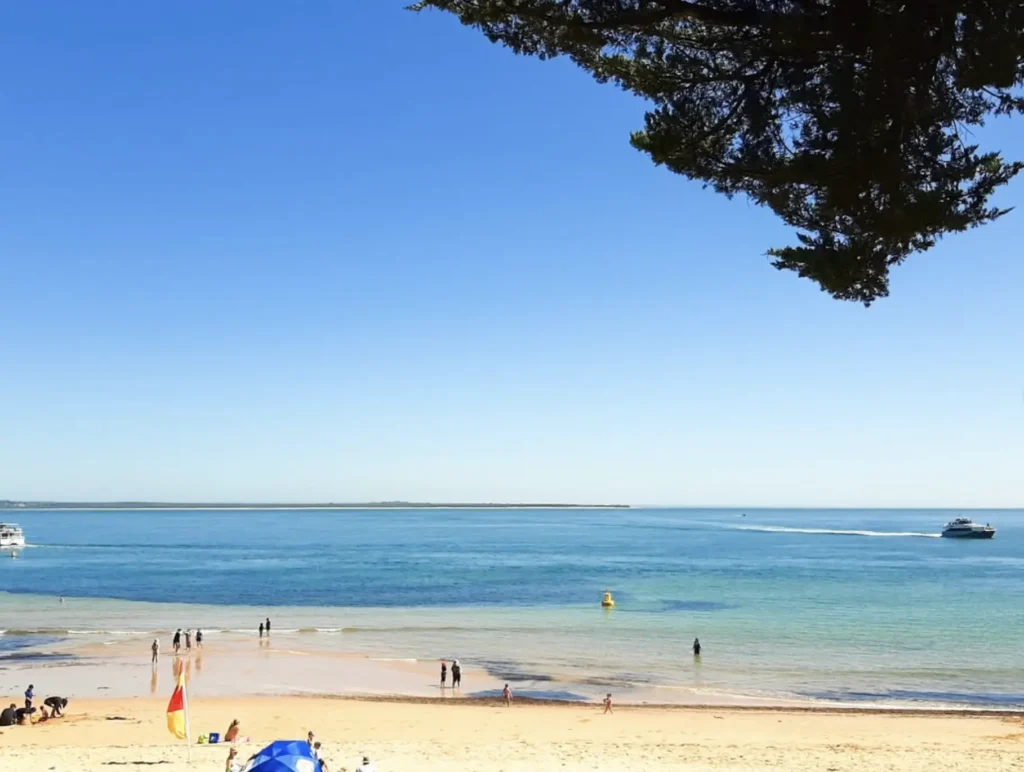
How Seasons Affect Perception of Size
- January: The island suddenly feels extremely small. All the accommodation, cafes and caravan sites are heaped together like sardines.
- Winter: On the other hand, it’s a very different story – wide open, windy but peaceful.
- Shoulder Seasons: These are the best of both worlds – you’ve got all the room in the world to explore without having to elbow your way through Cowes or wait in line at the big attractions.
Days when the island is crowded can even turn a 26km place into a logistical nightmare.
Wildlife Adds Its Own Timetable
Penguins, wallabies, koalas, shearwaters – they don’t operate on your timetable. They work on their own, and that can make a real difference when it comes to planning your day.
How Wildlife Affects Travel Planning
- Penguins at Summerlands: Everyone heads west at sunset – you’ve got to be ready for the crowds.
- Koala Conservation Centre: Try to get there early, before they all crash out in the middle of the day.
- Wallabies: Active at dawn and dusk, so you’ve got to drive carefully.
- Seals at Seal Rocks: You can get to them via the boardwalk at the Nobbies Centre or on a boat tour, but be aware that it’s a limited-access area.
A Simple Half-Day or Full-Day Flow
Planning your route becomes a whole lot easier when you can see how the island’s size dictates your day on the ground. These sample itineraries give you a sense of how to pace yourself so you’re not stuck racing the sunset or missing out on all the sights in between your stops.
Circuit – About 3-4 Hours
- Pop over the San Remo Bridge into Newhaven first.
- Take some time to either walk along Cape Woolamai or simply enjoy the beach at Newhaven.
- Grab a bite to eat or a coffee in Cowes – it’s a great place to rest your feet.
- Take a stroll along the Nobbies Centre boardwalk.
- If you time it right, you might even catch the sunset and some penguins.
Circuit – 6-8 Hours
- Get up early and catch the sunrise at Cape Woolamai.
- Kick off your day with a walk through the Wetlands or by doing the Woodland Loop.
- Churchill Island is next, with a heap of heritage and wildlife to check out.
- Take a wander along Cowes Jetty – it’s a great spot to unwind.
- Visit the Nobbies Centre and check out Seal Rocks.
- Finish your day with some penguin-watching.
When you break it all down into manageable bits, the island becomes pretty easy to understand – and a whole lot of fun to explore.
FAQ
How big is Phillip Island anyway?
Phillip Island is roughly 101 km² in size, stretching out over about 26 km and with nearly 97 km of coastline.
How long does it take to drive the island loop?
Without stopping, you can do it in about 1-1.5 hours – but be realistic, with all the attractions, walks and wildlife spotting, you’re probably looking at 3-8 hours.
Does the island include places like Cape Woolamai and Churchill Island?
Yeah – both are part of the wider visitor region and add to the whole sense of space and exploration.
Why does Phillip Island feel so much bigger in peak season?
Well, it’s pretty simple really – crowds, traffic and queues at places like Cowes Jetty, the Nobbies Centre and the main attractions all make it feel like you’ve got less time to get around.
Is the island suitable for walking and wildlife-focused trips?
Absolutely – the tracks at Cape Woolamai and the Woodland Loop are great for exploring, and you’ll often get to see native Aussie animals popping up along the way.